The Ridotto, 1638
Every "world's oldest casino" headline in Europe traces back to one room, in a building most visitors never notice, that stopped being a casino 252 years ago.
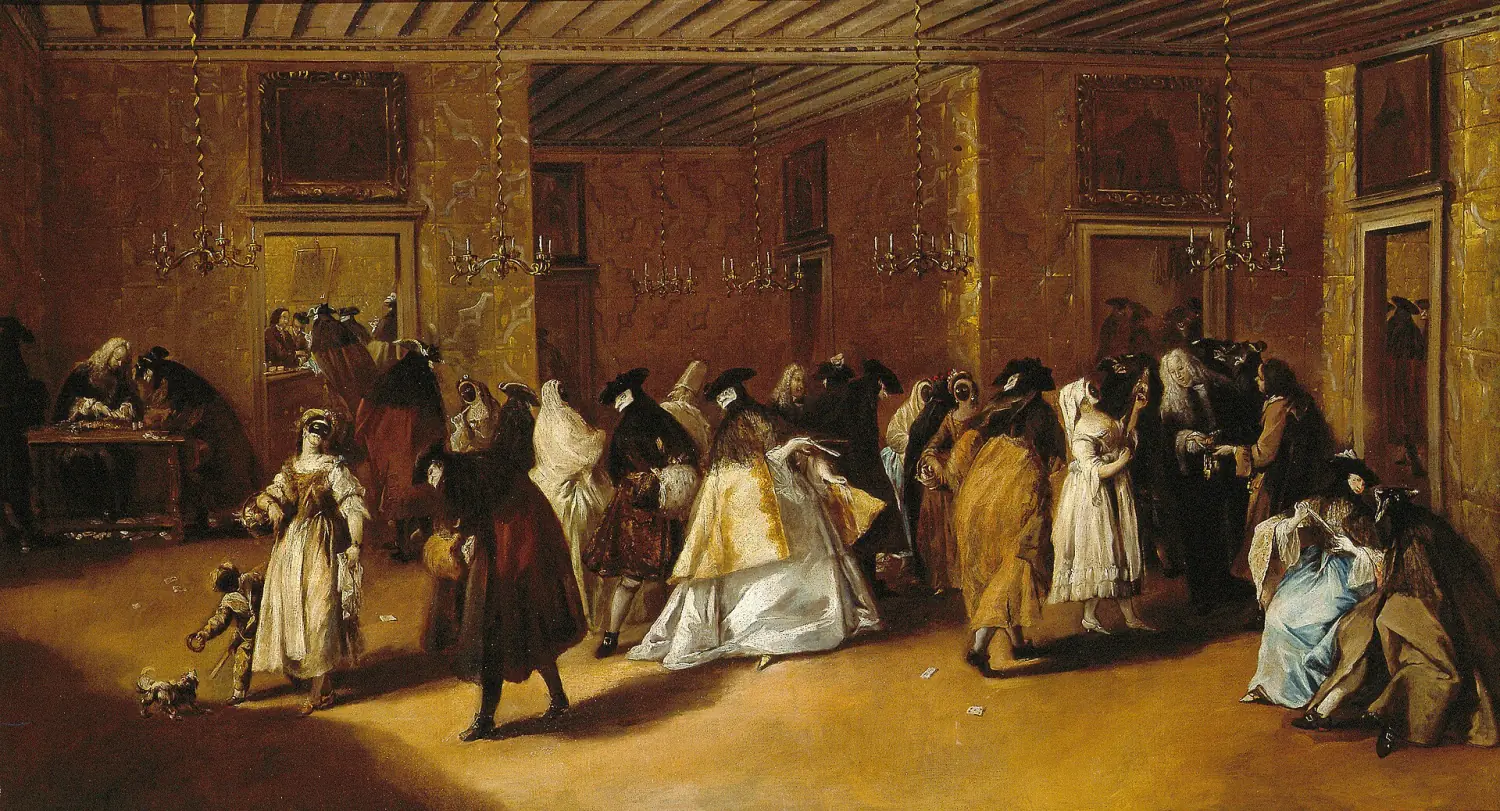 c. 1755
What is documented
In 1638 the Great Council of Venice opened the Ridotto in a wing of Palazzo Dandolo, beside the church of San Moisè. It is the first public, legal, state-run gaming house in the West that anybody can point to with paperwork, and that is why it matters. Gambling houses existed everywhere. A state saying "here, and only here, and we run it" did not.
The rules were as strange as the arrangement. Only nobles could play. They played masked, in tricorn hats, in an establishment the Republic had opened partly so that it could watch the thing it could not stop. It ran for 136 years.
In 1774 the Great Council closed it. The push came from the reformer Giorgio Pisani, and the stated motive was preserving piety and moderation. Whatever you make of that reasoning, the vote is real and the date is firm, and it is the beginning of a 185-year hole.
What is not documented, and gets printed anyway
Three claims travel with the Ridotto everywhere and we could not stand any of them up.
- That the Ridotto was tied to the Teatro San Moisè. The two were near each other and shared a parish. That is proximity, not a relationship, and we have found nothing that makes it one. The theatre turns up in the story because the room is easier to place if you attach it to a landmark, not because a source says so.
- That Trente et Quarante was on the tables. It appears in a great deal of writing about the Ridotto and on no official list we could find. It may well be true. We are not going to be the fourteenth site to assert it without a source.
- That Tullio Lombardo finished Ca' Vendramin Calergi. The Lombardo family completed the palace and that is documented. The individual name is not, and naming a specific fifteenth-century sculptor to make a sentence sound authoritative is exactly the habit this chronicle exists to break.
Then the hole
From 1774 to 1936 there is no Venetian casino at all. That is 162 years before play returned anywhere, and 185 before the address you would visit today made any sense. The chronology is short and worth reading slowly:
| Year | What happened |
|---|---|
| 1481 | Mauro Codussi begins Ca' Vendramin Calergi for Andrea Loredan. Nothing to do with gambling; nobody has thought of the Ridotto yet. |
| 1509 | The palace is finished, at a cost of more than 200,000 ducats. The Lombardo family completed the work. |
| 1638 | The Great Council opens the Ridotto in Palazzo Dandolo, near San Moisè. |
| 1774 | The Great Council closes it, on Giorgio Pisani's initiative. |
| 1882 to 1883 | Richard Wagner takes the mezzanine of the white wing at Ca' Vendramin Calergi and works on the score of Parsifal. He dies of a heart attack there on the afternoon of 13 February 1883, aged 69. Still no casino in the building. |
| 1 July 1936 | Play returns to Venice, at the Lido. |
| 1946 | The Comune di Venezia buys Ca' Vendramin Calergi. |
| 1959 | It becomes the casino's winter home. This is the first year in which the sentence "the casino at Ca' Vendramin Calergi" is true. |
| February 1995 | The Wagner museum opens inside the palace, built on Josef Lienhart's collection, the largest in private hands outside Bayreuth. |
| 1999 | Ca' Noghera opens near Marco Polo airport: the first American-style casino in Italy, over 5,000 square metres. |
So what survives of 1638
The institution, the paperwork and the line of descent. Not the room, not the building, not the run of years. Venice can honestly say it founded the first state-run public casino in the West, and it can honestly say the modern operation descends from that decision through the city that still owns it outright. What it cannot say, and to be fair does not say in so many words, is that anything has been continuous.
Our view, for what it is worth: 1638 is a better fact than the slogan built on it. A republic opening a gaming house so that it could supervise the vice it had failed to ban, then closing it 136 years later in a fit of civic virtue, then leaving the whole idea alone for 185 years and finally putting the tables in the palace where Wagner died, is a far stranger and better story than "world's oldest casino".
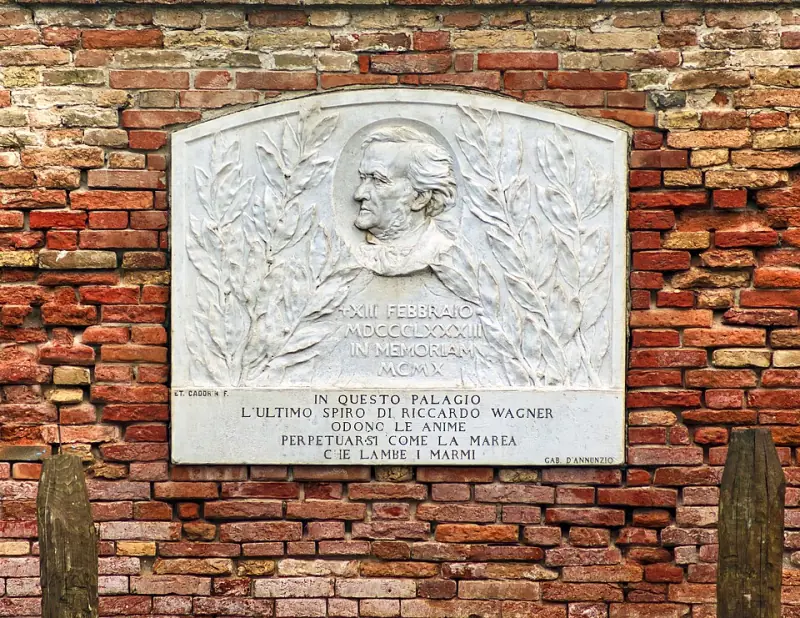 1883
1883
Checked 17 July 2026. Practical detail, entry prices and the rest of the Venice entry are on the front page. The dates above are drawn on the timeline.