primavactor The Chronicle

A chronicle of Europe's oldest gaming houses

Everyone is the oldest. Nobody has the receipts.

Venice says 1638. Spa says 1763. Both stopped for decades, and both moved. Here are the five headline claims of historic Europe, dated line by line.

Independent editorial guide, kept in York since 2016. We take no money from the venues, we take no bookings, and where the record runs out we say so rather than round it up.

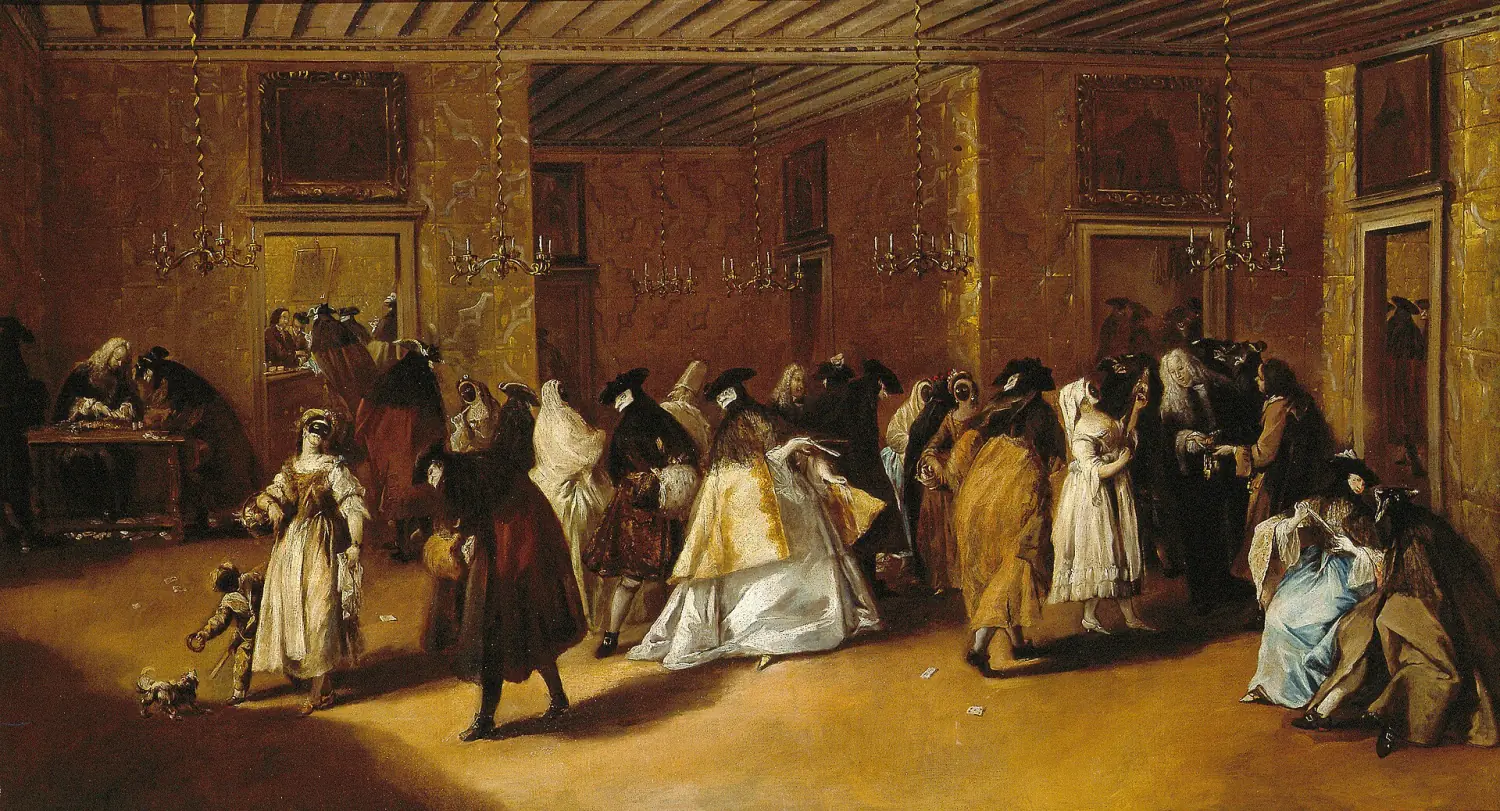
Francesco Guardi's painting of the Ridotto in Palazzo Dandolo: masked Venetian nobles standing in groups around card tables in a long, dim hall.
The Ridotto in Palazzo Dandolo, painted by Francesco Guardi around 1755. Venice dates itself from this room. The Great Council closed it in 1774 and the casino you can visit today is somewhere else entirely. Public domain, via Wikimedia Commons.

Who keeps this

Started to settle a pub argument, and it got out of hand

I am Helena Marchbank. In March 2016 I spent an afternoon in the library at York Minster trying to prove a friend wrong about which casino in Europe was the oldest. Six books, four confident answers, no agreement. One of them gave two different dates eleven pages apart.

What I worked out that afternoon is the whole point of this site: the argument is not about history, it is about grammar. People say "oldest" and mean three unrelated things. Once you split them, the fighting stops and the facts get interesting.

So primavactor is a chronicle rather than a guide. No stars, no rankings of the carpet, no advice about how to play, because we are not that kind of publication. Just dates, and where the dates came from, and where they break.

The honest bit: I have stood inside two of these five buildings. The other three I know from archives, official pages, regional government records and letters to press offices. When a paragraph rests on reading rather than on being there, it is written that way.

Helena Marchbank, editor. York, England. Chronicle begun March 2016. Writes back to [email protected], usually inside three working days.

Three things everybody calls "old"

Almost every argument about the oldest casino in the world is two people using one word for two different objects. These are the three we keep apart, and we label which one we mean every single time.

The first thingFounding

The moment somebody was allowed to open, or first did. It is a date about a decision: a council vote, a privilege granted, a door unlocked.

It says nothing about tomorrow. A house founded in 1638 and shut in 1774 was still founded in 1638.

Venice: 1638, by the Great Council, in a wing of Palazzo Dandolo near the church of San Moisè.

The second thingContinuity

Whether it has kept doing the job since, without a break. This is a date about a record, and it is the one that collapses under pressure.

Every house in this chronicle stopped at least once. Three of them were shut by the same imperial law in 1872.

Venice: broken. 185 years between the closure of 1774 and the first play at the Lido in 1936.

The third thingThe building

The fabric you can physically walk into. A date about stone, and usually the youngest of the three, whatever the brochure implies.

An old institution can trade in a new building. A new institution can trade in an old one. Venice does the second.

Venice: Ca' Vendramin Calergi, begun 1481 and finished 1509. In casino use only since 1959.

The entries

Five houses, in the order of the date each one puts on its own front page. Every entry carries a Continuity score out of ten: how well the claimed antiquity survives checking. It is not a rating of the visit, the room or the welcome, and it is not meant to be read as one.

Claims1638

Casinò di VeneziaCa' Vendramin Calergi and Ca' Noghera, Venice, Italy

The strongest founding claim in Europe, and the weakest continuity to go with it. In 1638 the Great Council of Venice opened the Ridotto in a wing of Palazzo Dandolo, by the church of San Moisè: the first public, legal, state-run gaming house in the West. Only nobles could play, and they played in tricorn hats and masks.

It lasted 136 years. In 1774 the Great Council shut it on the initiative of the reformer Giorgio Pisani, whose stated motive was preserving piety and moderation. Then nothing, for 185 years. Play returned at the Lido on 1 July 1936. The Comune bought Ca' Vendramin Calergi in 1946 and made it the casino's winter home in 1959.

So the institution genuinely dates from 1638, and nothing you can stand in does. The palace on the Grand Canal is older than the claim and unrelated to it: Mauro Codussi began it in 1481 for Andrea Loredan, it was finished in 1509 at a cost of more than 200,000 ducats, and the Lombardo family completed the work. The second venue, Ca' Noghera, opened out by Marco Polo airport in 1999 and was the first American-style casino in Italy, at over 5,000 square metres.

The room Wagner died in

Richard Wagner took the mezzanine of the white wing in 1882 and worked on the score of Parsifal there. He died of a heart attack on the afternoon of 13 February 1883, aged 69. The palace has held a Wagner museum since February 1995, built on Josef Lienhart's collection, the largest in private hands outside Bayreuth. It is an odd building to gamble in, and everyone involved knows it.

The snag

The card at Ca' Vendramin Calergi costs 50 euros before you sit down. Twenty of that comes back as playing credit and the rest buys the cloakroom, a drink, parking and the shuttle, but it is still a 50 euro door. Ca' Noghera is 10 euros, or 5 if you want none of the extras.

4Continuity, out of 10

The founding date is real, documented and unusually early. Everything after it is discontinuous: a 185 year silence, a different island, then a different palace. Venice is the oldest line of descent in Europe and not the oldest anything else.

Official site The Ridotto, in full Owner: Comune di Venezia, 100 per cent

The same stone, twice

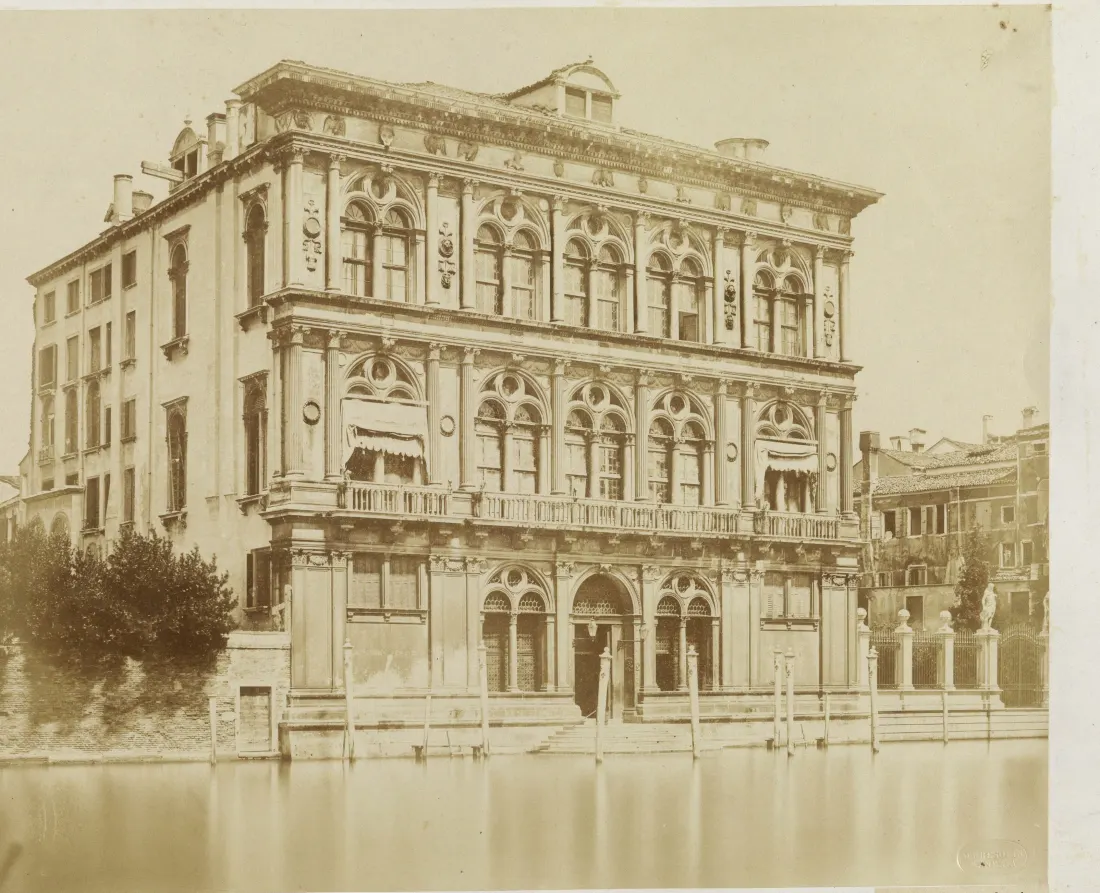
Albumen photograph of Palazzo Vendramin Calergi around 1855: the Renaissance palace seen from the Grand Canal with awnings hung over the first-floor windows, shutters closed, mooring posts in the water. c. 1855
Domenico Bresolin photographed the palace around 1855. Look at the awnings and the closed shutters: a private house on the Grand Canal, getting on with its afternoon. The Ridotto had been shut for 81 years by then, Wagner would not move in for another 27, and the casino not for another 104. Public domain, via Wikimedia Commons.
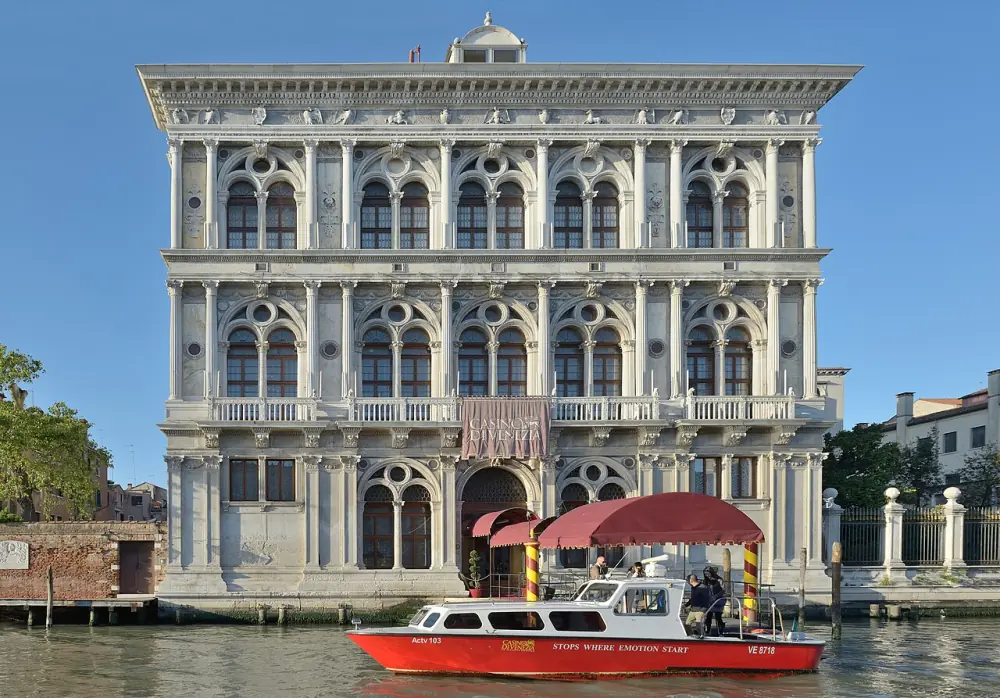
Ca' Vendramin Calergi seen across the Grand Canal: a three-storey Renaissance palace of white stone with paired round-arched windows, moored posts in the water in front of it. Today
The same facade now, and the winter home of the casino since 1959. Codussi began it in 1481. Nothing about the building changed to make it a gaming house; the city simply bought it in 1946 and put the tables in. Photo Wolfgang Moroder, CC BY-SA 3.0, via Wikimedia Commons.
Operator
Casinò di Venezia Gioco S.p.A., wholly owned by the Comune di Venezia. Share capital 3 million euros. The company was formed on 1 October 2012; CMV S.p.A. merged into it with effect from 10 November 2023. The casino's own English "group" page still describes the old structure, so we follow the Comune rather than the website.
Venues
Ca' Vendramin Calergi, Cannaregio 2040. Ca' Noghera, opened 1999.
Age
18 and over. Italy. Original ID, no phone photographs.
Entry
Ca' Vendramin Calergi 50 euros including 20 euros of playing credit. Ca' Noghera 10 euros including a 10 euro non-convertible chip, or 5 euros without the extras. Checked 17 July 2026; this structure moves.
Dress
Grand Canal venue is the stricter of the two: no vests, shorts, sandals, flip-flops, tracksuits or beachwear. Ca' Noghera allows shorts just above the knee and trainers with a suitable top.
Games
Texas Hold'em, Fair and French roulette, Chemin de Fer, Punto Banco, blackjack, slots. Ca' Noghera also lists Baccarat, Caribbean Poker, Ultimate Poker and 550 slots.
Michelin
No stars at either venue. Alessandro Borghese, Il lusso della semplicità, opened at Cannaregio 2040 in June 2022 and is listed in the MICHELIN Guide Italia 2025 selection, without a star and without a Bib Gourmand. Listed is not starred.
Hotel
None, at either venue. Both are gaming rooms only.

Claims1763

Casino de SpaRue Royale, Spa, Belgium

This is the entry where two official bodies disagree about the same building, in public, and have done for years. The casino calls itself le plus vieux casino du monde and dates from 1763. The Walloon regional government dates the opening to 1771 and calls it the first modern casino in Europe, which is a smaller and much more careful claim.

Both are describing real events. In 1763 the town of Spa refused the project and four private investors picked it up. The theatre followed in 1769, the ballroom in 1770, and La Redoute opened in 1771. So 1763 is the privilege and 1771 is the door. Whichever you prefer, you are choosing a definition, not a fact.

What cannot be said in either version is "continuously operating since 1763". Play here was banned twice, in 1872 and again in 1902, and during that stretch the building worked as a hospital and as an orphanage. Their own About page says so.

Nor is the building Georgian. A fire in February 1917 took the interiors. The facade dates from 1905 to 1907 and is a replica of the facade of 1784; the interiors were rebuilt between 1917 and 1929. Alban Chambon did the first work, Marcel Hansen and Marcel Paes the rest. Barthélemy Digneffe designed the original that none of it survives from.

The snag

Nothing you can see at Spa is as old as the number on the sign, and the government of the region it sits in publishes a different number. That is not a scandal, it is just two claims wearing one date.

3Continuity, out of 10

Two bans, a fire, a period as a hospital, a replica facade, and a headline date that the regional authority contradicts by eight years. The history is genuine and the slogan is not carrying it.
Official site Belgium: 21 and over, whole sector, since 1 September 2024
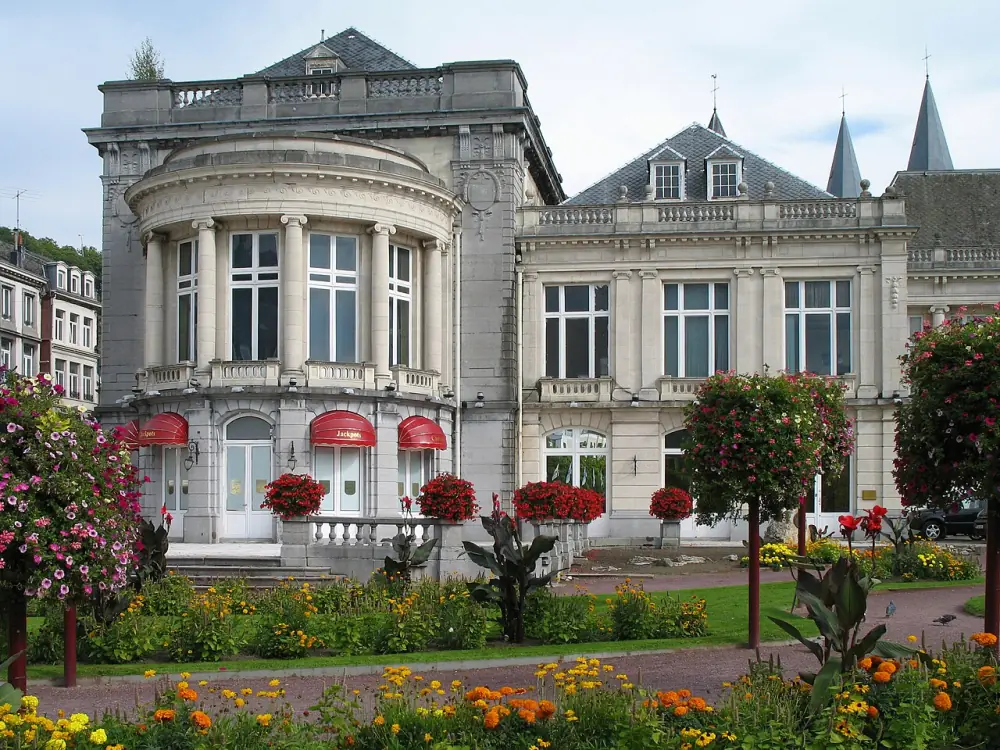
The Casino de Spa seen from the street: a pale stone building with a curved colonnaded bay, mansard roofs and red awnings, flower beds in front. Today
Casino de Spa as it stands. The facade went up between 1905 and 1907 as a replica of the one from 1784. Photo Marc Ryckaert (MJJR), CC BY 3.0, via Wikimedia Commons.
Licence
Class A, held by CASINO DE SPA SA/NV, valid 1 January 2017 to 1 January 2032. The licence holder is the company, not the wider Gaming1 and Ardent group it sits in.
Age
21 and over. This is now all of Belgium: the law of 18 February 2024 lifted arcades, betting and bingo from 18 to 21 on 1 September 2024, under a casino rule that had been 21 since 2018.
Entry
No entry fee is stated anywhere official. We are not going to invent one.
At the door
Surname, first name and date of birth are recorded without exception and run against EPIS, the Gaming Commission's excluded-players system, running since 2004.
Floor
Around 100 slots, plus 28 on the smoking terrace. Roulette, blackjack, poker.
Eating
Le Grill du Casino. The operator does not name the chef, so neither do we.
Hotel
None on site. The Radisson Blu Balmoral is a separate business roughly two kilometres away.
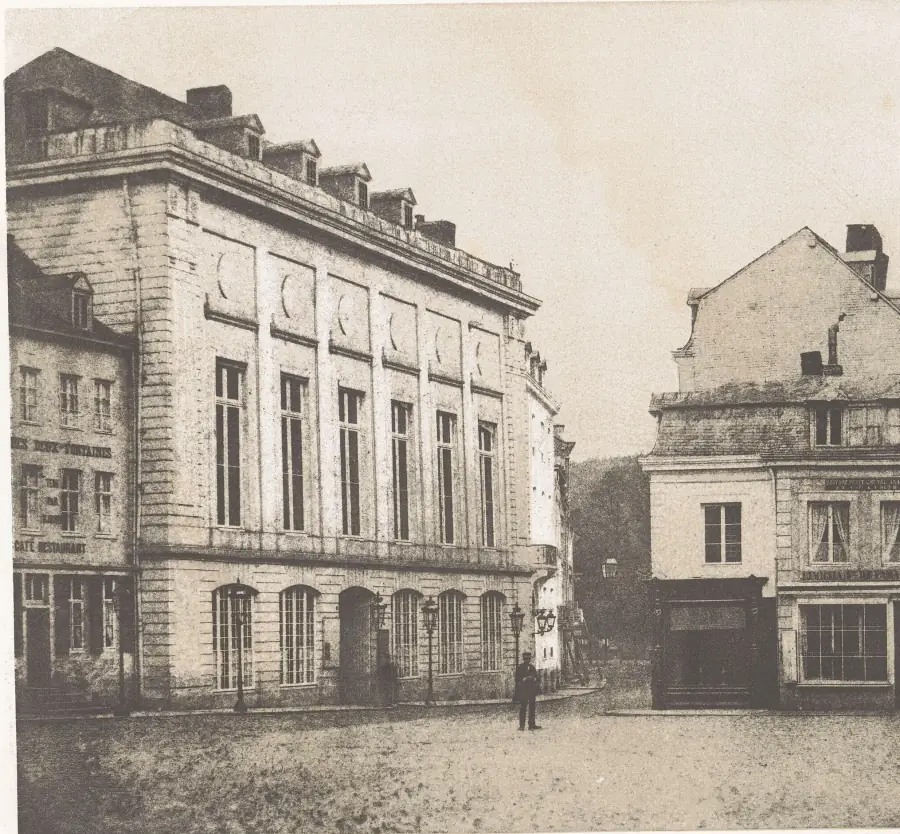
Photolithograph of La Redoute at Spa around 1860: a plain neoclassical block with tall arched ground-floor windows and oval medallions along the upper storey, a lone man standing on the empty square in front, a cafe and a gabled house to the right. c. 1859 to 1864

Plate held against the sign

La Redoute, photolithographed by Simonau and Toovey using Asser's process. The Rijksmuseum dates its print to about 1859 to 1864 and no closer, so neither do we.

This is the house while it was still working. Before the ban of 1872, before the second ban of 1902, before the stretch as a hospital and an orphanage, and before the fire of February 1917 took the interiors out.

Now look again at the photograph in the column above. We are not going to tell you how much of this stone stands behind the present frontage, or even which elevation you are looking at here, because the record we have does not say and nobody has published a room-by-room account. What we can say is narrower and duller and true: the number on the sign is 1763, and the building selling it was finished in 1929.

Public domain, via Wikimedia Commons.
Claims1771

Spielbank WiesbadenKurhaus, Kurhausplatz, Wiesbaden, Germany

Wiesbaden dates from 1771 and plays in a building from 1907. The gap between those two numbers is where the interesting part lives.

The imperial ban of 1872 closed it, along with Baden-Baden and most of the German spa towns, and it stayed closed for 77 years. It came back on 29 October 1949, but not here: play reopened in the foyer of the Hessisches Staatstheater, next door. It only moved into the Kurhaus on 3 November 1955.

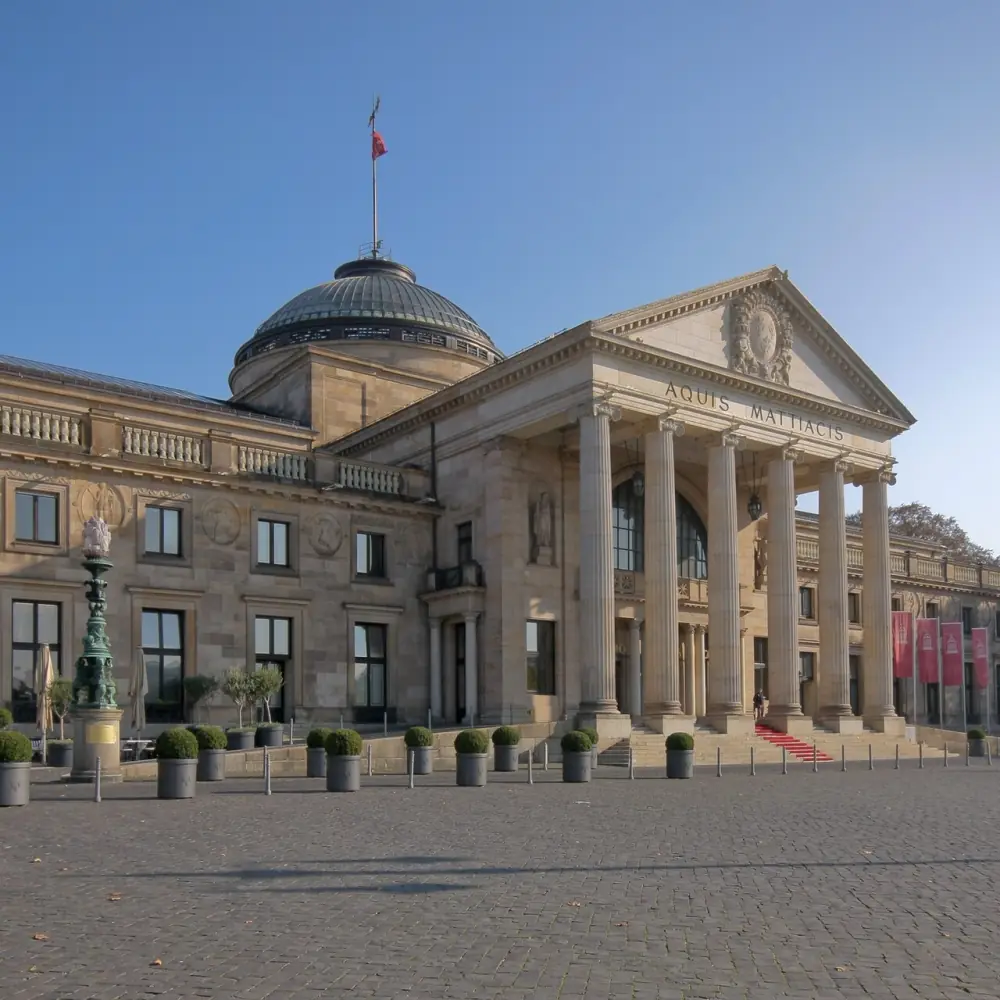
The Kurhaus itself is Friedrich von Thiersch's, opened in 1907 and inaugurated with Wilhelm II in attendance. The portal carries the words AQUIS MATTIACIS, the Roman name for the waters here, and the columns are Corinthian. We mention this because a good deal of travel writing puts a different word on that portal and the wrong order on those columns, and both are easy to check by standing in front of it.

Dostoevsky, briefly, and honestly

He was here in 1862, in 1863, from 2 August to the end of September 1865 when he got stuck after losing, and again in 1871. That is as far as the record goes. The Gambler was written in Russia and finished on 30 October 1866 in twenty-six days, not in this town, and Roulettenburg is not provably Wiesbaden: Bad Homburg and Baden-Baden claim it just as loudly and there is no consensus. The city itself is careful about this. So are we.

The snag

The claim is 1771 and the fabric is 1907, which means the house that carries the date is not the house you walk into. Also worth knowing before you plan an evening: there is no jacket rule and no entry fee, and French roulette is not on the official game list, whatever the guidebooks say.

3Continuity, out of 10

Seventy-seven years dark, a comeback in a theatre foyer, and six more years before it got back into the building it is named after. An honest, well-documented history that does not support a continuity claim.

Official site Hesse: 18 and over
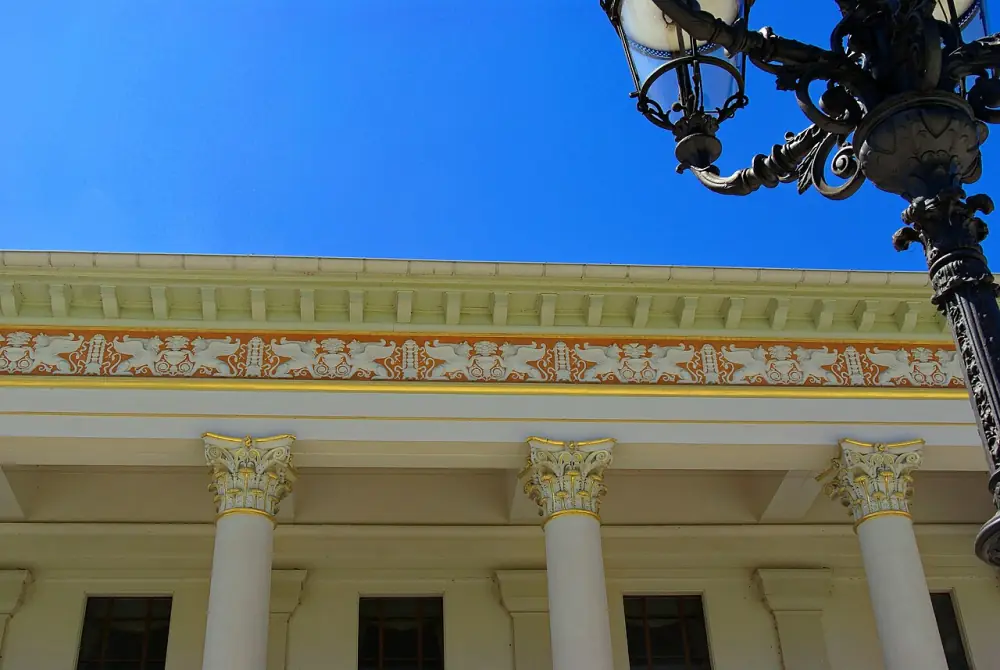
The columned portico of the Wiesbaden Kurhaus, with the inscription AQUIS MATTIACIS carved across the entablature above six tall stone columns. 1907
Thiersch's portal, and the two-word answer to a lot of travel writing: AQUIS MATTIACIS, to the Mattiacian waters, not SALUS. The columns are Corinthian, not Ionic. Both are checkable by standing in front of the thing. Photo Martin Kraft, CC BY-SA 3.0, via Wikimedia Commons.
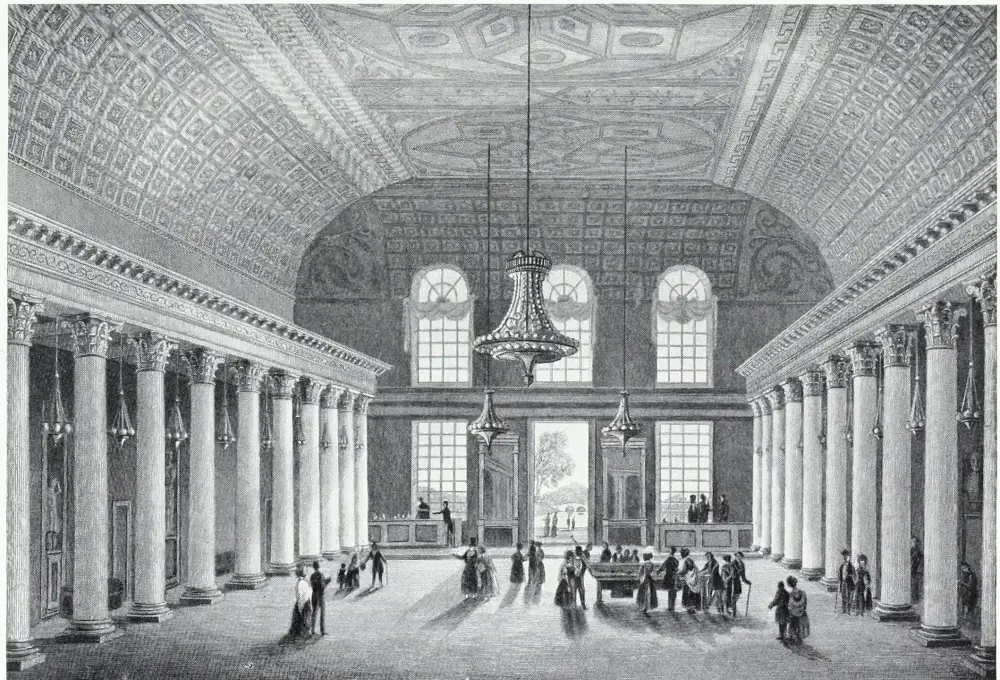
Engraving of the old Wiesbaden Kursaal interior: a long colonnaded hall under a coffered barrel ceiling, lines of Ionic columns down both sides, small groups of figures in early nineteenth-century dress standing around a table. Before 1907
The hall of the old Kurhaus, Christian Zais's building of 1810, engraved after Schönfeld and reprinted by Ferdinand Luthmer in 1914. This, not the building above, is the house that carried the 1771 claim through to the ban. Zais's Kurhaus is also where the Ionic portico of the guidebooks belongs, and it is the reason the mistake is so durable: the portico was real, it just was not this one. Public domain, via Wikimedia Commons.
Structure
Concession from the city of Wiesbaden, supervised by the Hessian interior ministry.
Building
Kurhaus by Friedrich von Thiersch, opened 1907.
Age
18 and over, under Hessian law. Do not generalise this to Germany: Baden-Württemberg and Bavaria are 21.
Entry
Free of charge, in the operator's own words.
Dress
Smart casual with a ban list rather than a jacket rule: no sportswear, hoodies, shorts, vests, sandals or headwear. A jacket is not required.
Games
American roulette, TouchBet, blackjack, poker, slots. French roulette is not on the official list.
Hotel
None on site.

Play from1812

Casino Baden-BadenKurhaus, Kaiserallee 1, Baden-Baden, Germany

The youngest of the four northern claims and, by our reckoning, the one with the most real old fabric still doing its old job. Play began on 16 June 1812, in the building of the former Jesuit college. In 1824 Friedrich Weinbrenner rebuilt the Promenadehaus into the Conversationshaus, which is the Kurhaus you walk into now.

Then the tenants, who are the story: Bernard and de Ballathier from 1812 to 1821, Chabert from 1824 to 1838, and from 1838 Jacques Bénazet, followed by his son Édouard. The Bénazet years are the Belle Époque ones, and they are what Charles Séchan was hired for. Séchan was a Paris theatre decorator, and between 1851 and 1855 he did the gaming rooms as stage sets: Corinthian columns, a frieze of paired griffins. Those rooms are still the rooms.

The imperial ban stopped play on 31 October 1872. It came back on 3 October 1933, the first post-ban concession in Germany, and then again on 1 April 1950 after the war. We have the two reopening dates and not the closing one in between, which is why that stretch is drawn as unmeasured on our timeline rather than guessed at.

One correction worth making, because it is repeated everywhere: this is not a town with a concessionaire. The operator is Baden-Württembergische Spielbanken GmbH & Co. KG, which has run it since 2003 and has been a subsidiary of the state of Baden-Württemberg since 1 January 2011. The Kurhaus building is held separately. The state owns the casino.

The snag

This is the fussiest door in the chronicle. Twenty-one and over, five euros for the classic games, long trousers and a jacket for men, and an original passport or ID card because they need it to run the OASIS check. A photograph on your phone will not do. Jacket hire is ten euros if you turn up without one.

6Continuity, out of 10

The operating record has the same 1872 hole as the others. What lifts the score is that Baden-Baden claims less and keeps more: a purpose-built house from 1824 and rooms from the 1850s, still in use for the thing they were built for.

Official site Baden-Württemberg: 21 and over
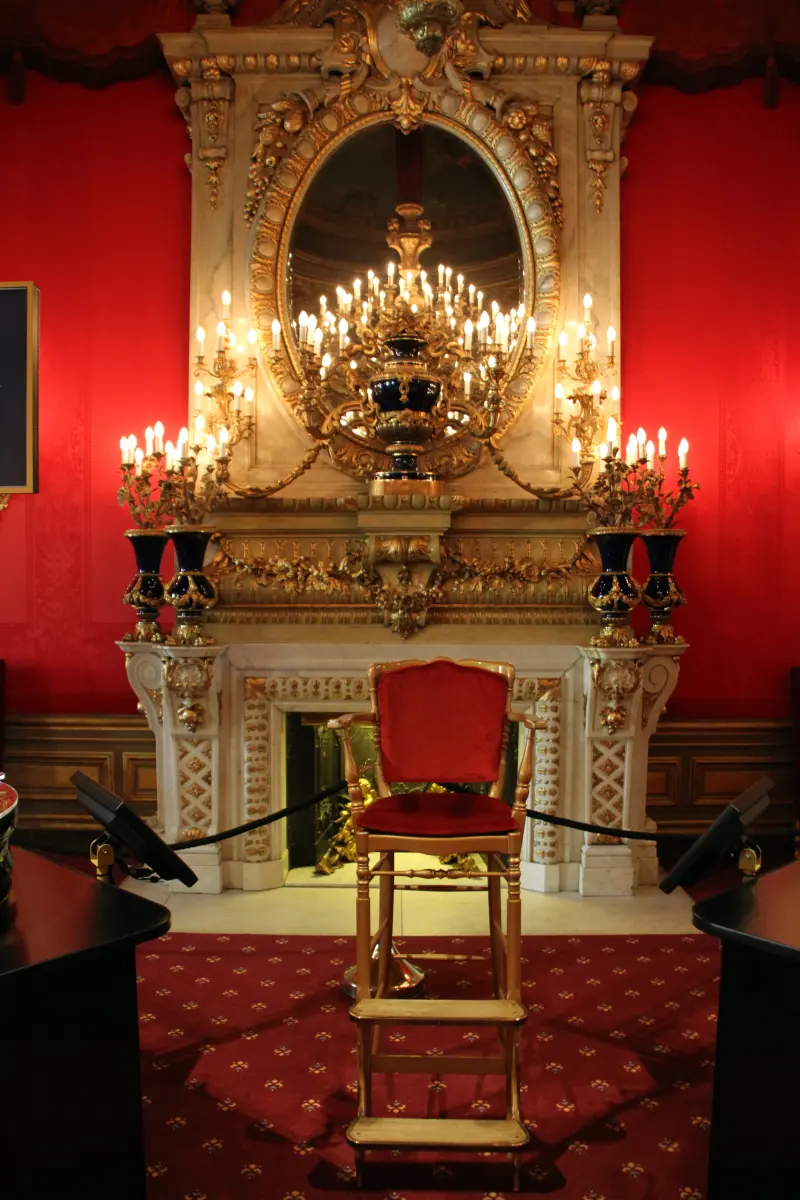
A gaming salon inside the Baden-Baden Kurhaus: scarlet damask walls, a marble chimneypiece under a gilt-framed oval mirror, branched candelabra alight, and the croupier's raised chair on its wooden steps between two gaming tables. 1851 to 1855
The reason this entry scores what it scores. Charles Séchan decorated these rooms between 1851 and 1855, and he was a Paris theatre man, which is exactly what they look like: this is a stage set that people have been gambling in for 170 years. The chair on the steps is the croupier's. Photo Gerd Eichmann, 2014, CC BY-SA 4.0, via Wikimedia Commons.
The Kurhaus at Baden-Baden from the west: a long neoclassical facade behind a row of tall columns, with lawn and clipped trees in front. 1824
The house those rooms sit in. Weinbrenner rebuilt the Promenadehaus into this in 1824, purpose-built for the job it is still doing. Photo Txllxt TxllxT, CC BY-SA 4.0, via Wikimedia Commons.
Operator
Baden-Württembergische Spielbanken GmbH & Co. KG, since 2003; a subsidiary of the state of Baden-Württemberg since 1 January 2011. Not a municipal concession.
Age
21 and over, under the Landesglücksspielgesetz of Baden-Württemberg. This state and Bavaria are the exceptions; most German states are 18.
Entry
5 euros for the classic games. Slots are free.
Dress
Men: long trousers and a jacket, both required. Shirt and tie are erwünscht, meaning desirable, not required. Jacket hire 10 euros. The slot area is smart casual.
ID
Original passport or identity card. Needed for the OASIS check, Germany's nationwide self-exclusion register run by the Regierungspräsidium Darmstadt under the Glücksspielstaatsvertrag of 2021, holding roughly 367,000 active blocks.
Games
French and American roulette, blackjack, poker, Ultimate Texas Hold'em. Slots sit in a separate area; published counts range from about 140 to over 150 and the sources disagree.
Rooms
Charles Séchan, 1851 to 1855.
Hotel
None on site.

Opened1931

Casino EstorilAvenida Dr. Stanley Ho, Estoril, Portugal

The youngest entry, the best documented, and the only one whose headline date we could not fault. Estoril says 1931 and 1931 is when it opened. That is rarer in this business than it sounds.

Three dates, three different things. The first stone went down in 1916, laid for the founder Fausto de Figueiredo. The casino opened on 15 August 1931 to a design by Raoul Jourde. The building you walk into opened on 28 March 1968, an extension by Filipe Nobre de Figueiredo with José Segurado, structure by Manuel Agostinho Duarte Gaspar, and the interiors by Daciano da Costa and José Espinho, two of the significant Portuguese designers of the century. It is a modernist building and it does not pretend otherwise.

The ownership surprises people. Estoril Sol SGPS is controlled by the Ho family of Macau: Finansol holds 57.8 per cent and is a subsidiary of STDM, which controls SJM Resorts, and the chair is Pansy Ho. Amorim Turismo is the minority holder at 32.7 per cent. Amorim separately holds the Figueira da Foz concession, which is a different venue and a common mix-up. The Estoril gaming zone concession, which includes Casino Lisboa, runs to 31 December 2037; the signing date is reported two different ways so we give only the expiry.

The Bond story, which we cannot give you

Here is what is solid: neutral Portugal made Estoril a junction for spies and exiled monarchs, Duško Popov was here from 29 June to 10 August 1941, and he met Ian Fleming. Everything after that is quicksand. Fleming himself, shortly before he died, told the BBC that the idea came from a game he played against Germans, and did not mention Popov. His biographer John Pearson called Fleming's version a complete fabrication in 1966. The famous baccarat scene against "Bloch" for thirty-eight to forty thousand dollars comes from Popov's own memoirs and was popularised by Larry Loftis in 2016; Country Life puts it plainly as rumoured although unproven. A story that rests on the memoirs of the man it flatters, with no contemporary document behind it, is a story we are not going to sell you as history. Casino Royale was not filmed here either. That was the Czech Republic, in 2006.

The snag

The largest casino in Europe is their own slogan and it comes with no metric attached: on their own page it appears in the heading and nowhere near a floor area or a table count. English Wikipedia says one of the biggest, which is defensible. Casinò di Campione is 55,000 square metres over nine floors. We are not repeating the superlative.

8Continuity, out of 10

A modest claim that holds. The mark is not a ten because nobody, including the operator, publishes whether the tables ran without interruption across those ninety-five years, and we will not fill that in for them.

Official site Portugal: 18 and over
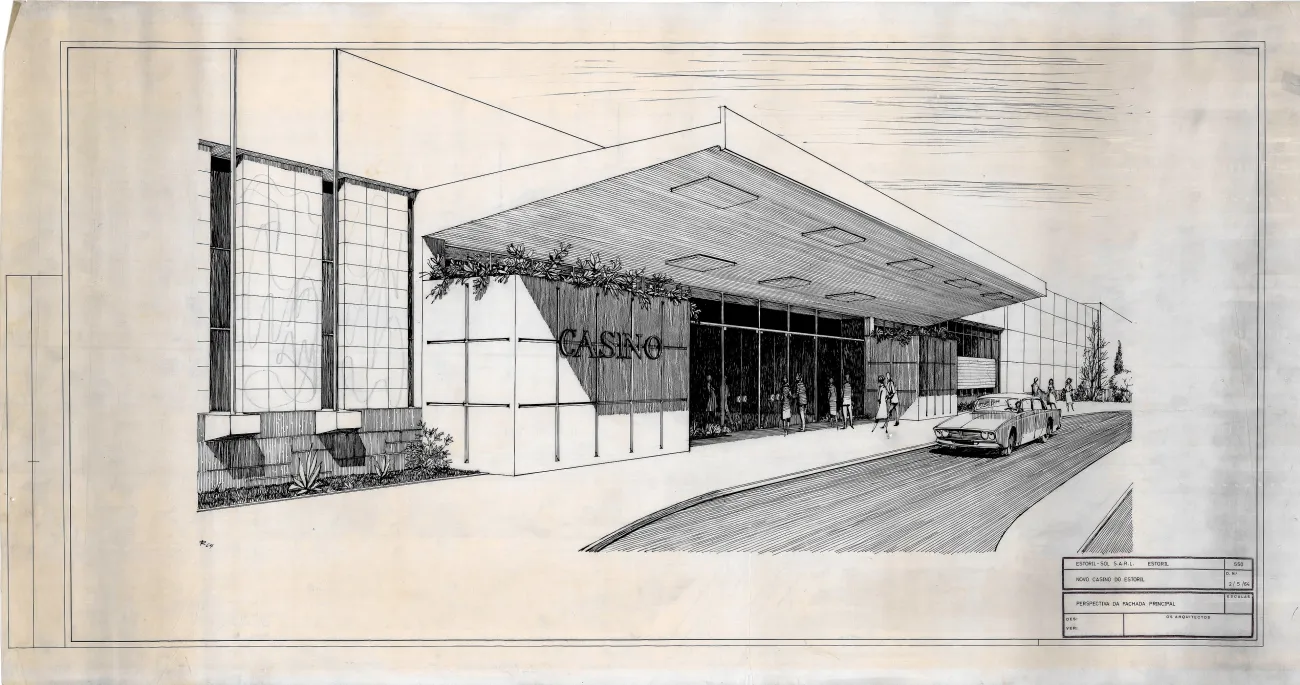
Architect's ink perspective on a drawing sheet, lettered NOVO CASINO DO ESTORIL: a low modernist entrance under a deep cantilevered canopy, the word CASINO on the wall, figures walking in and a car pulling up, title block in the bottom right corner. Before 1968
The building before it existed: Perspectiva da Fachada Principal for the Novo Casino do Estoril, drawn for Estoril-Sol. Wikimedia Commons credits the design to Filipe Nobre de Figueiredo and José Segurado; the sheet's own signature line, marked Os Arquitectos, was left blank. The title block reads 2/5/64 in a field headed D. N.º, which we take for a drawing number rather than a date, though it may be 2 May 1964 and we cannot tell you which. Photograph of the drawing by António Pinto da Costa, CC BY-SA 4.0, via Wikimedia Commons.
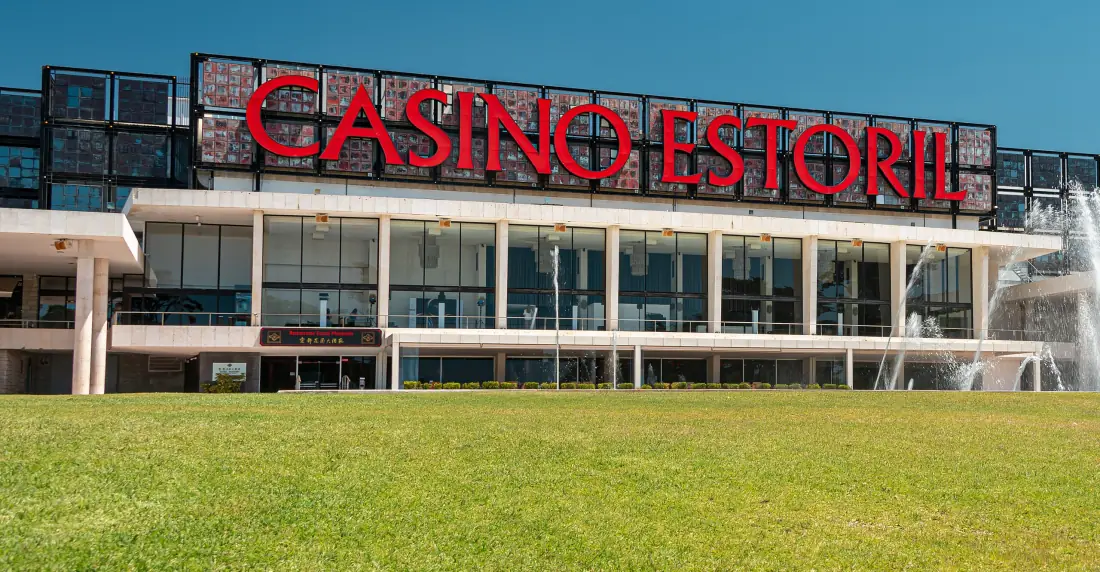
The front of Casino Estoril from the gardens: a long low modernist block, a row of square columns carrying a deep concrete slab over a fully glazed ground floor, with the words CASINO ESTORIL in tall red letters across the roofline and fountains playing to the right. 1968
The result, opened 28 March 1968: the same colonnade under the same deep slab that the sheet above proposed. Estoril is the one entry in this chronicle where you can hold the intention against the outcome and find them the same building. Daciano da Costa and José Espinho did the interiors, which is a serious pair of names in Portuguese design and the part of this place nobody writes about. Photo Jorge Franganillo, 2024, CC BY 2.0, via Wikimedia Commons.
Owner
Estoril Sol SGPS, S.A. Finansol 57.8 per cent, a subsidiary of STDM; Amorim Turismo 32.7 per cent as minority; chair Pansy Ho.
Concession
Estoril gaming zone, including Casino Lisboa. Expires 31 December 2037.
Age
18 and over, under Decreto-Lei 422/89. ID required and registered: passport, driving licence or the IGov App.
Entry
Free. The ID desk is the real barrier, not the price.
Dress
No dress code in the official conditions, whatever third-party sites tell you. There is a discretionary refusal on grounds of behaviour or appearance, which is a different thing.
Refused
Cameras, which go to the cloakroom under Decreto-Lei 422/89. Also military and paramilitary personnel in uniform, of any nationality.
On site
Seven types of game, two restaurants, three bars, one art gallery. The Salão Preto e Prata is the events and show room. Open daily 15:00 to 03:00.
Eating
Estoril Mandarim, Cantonese, chef Ku Yan Onn, the only name the operator confirms. It holds a Mérito 20 Anos from the Guia Boa Cama Boa Mesa 2023, which is not a Michelin award. Bistrô is 25 euros, 19:00 to 22:30. No Michelin stars on site; the starred kitchens in Cascais are Kappo and Fortaleza do Guincho, both elsewhere.
Not published
Slot count. The figure of 1,100 in circulation comes from an affiliate site and we have not been able to source it.
Hotel
None on site.

The oldest-casino question, drawn to scale

One row per house. The red circle is the date it claims. The solid bar is operation we can source at both ends. The red tick is a documented ban. The diamond is the building you can walk into today. The white space is the part nobody puts in the brochure.

Exhibit Two rooms that carried the claims, and are not there

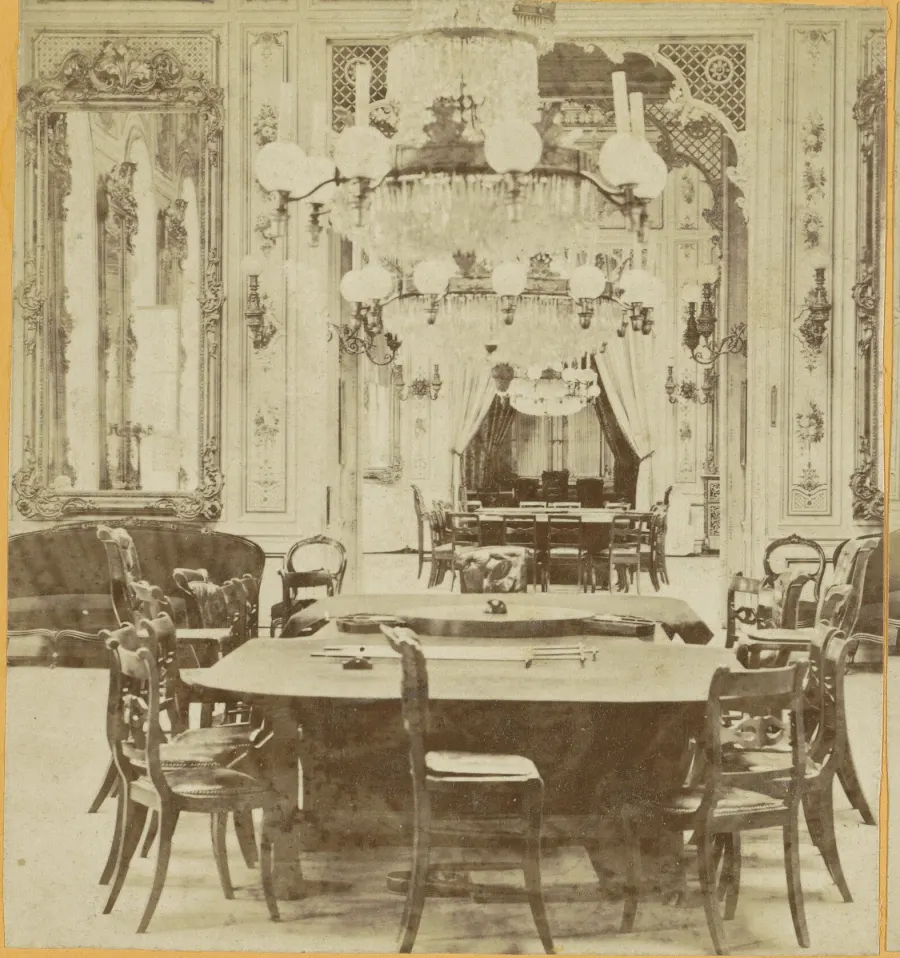
Half of a sepia stereoscopic card showing the gaming rooms of the old Wiesbaden Kurhaus: a long oval gaming table with a rack down its centre, bentwood chairs pushed back around it, gas globes and a crystal chandelier overhead, and a further table under a draped alcove beyond. 1868 to 1890
One half of a stereoscopic card, number 104 in E. Linde's Rhine series, captioned Wiesbaden, Spielsäle im Kurhaus. The Rijksmuseum dates it between 1868 and 1890 and will not go closer, which is unhelpful, because the imperial ban emptied this room at the end of 1872. The tables are still standing in it, so the scene is almost certainly from the earlier end of that range. Almost certainly is as far as we will go. Rijksmuseum, CC0, via Wikimedia Commons.
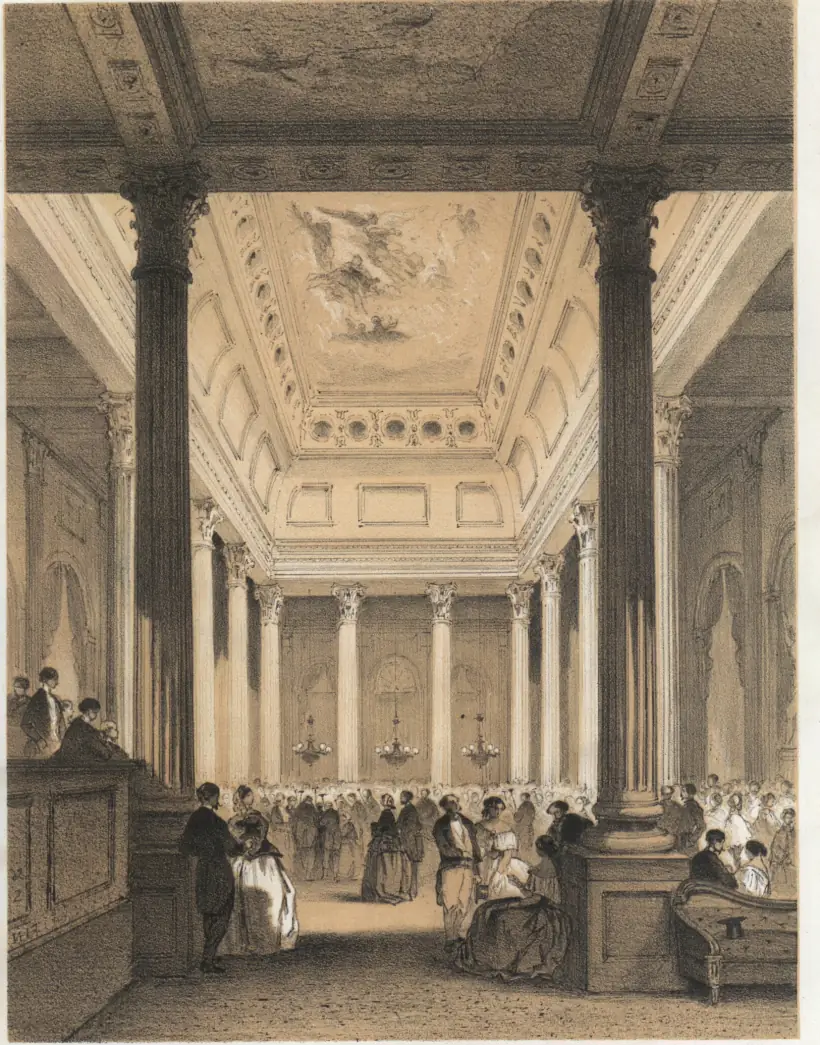
Tinted lithograph of the Salle de la Redoute at Spa: a tall hall between rows of Corinthian columns under a painted ceiling, crowded with figures in frock coats and wide crinoline skirts, an attendant leaning on a rail in the foreground. Before 1917
Salle de la Redoute, lithographed by Louis Stroobant of Ghent for the Brussels publisher F. Claassen. Ghent University Library dates the print only to the late nineteenth or early twentieth century, and the crinolines argue for earlier. The year does not matter much here: whenever it was drawn, this is the room before the fire of February 1917, and the interiors you can stand in at Spa were built between 1917 and 1929. Public domain, via Wikimedia Commons.

Neither of these rooms survives, and both of them are the reason a house downstairs has a number on its sign. That is the whole argument of the chart below, made twice, in photographs older than most of the claims they undercut.

Drag the chart sideways to read the full span, or open the table underneath.
Claimed founding, documented operation and present building: five European gaming houses, 1480 to 2026 A range chart with one row per house. Every one of the five stopped at least once. Venice claims 1638 but lost 185 years between 1774 and 1936 and now plays in a different building, finished in 1509. Spa claims 1763 while the documented opening is 1771. Spa, Wiesbaden and Baden-Baden were all closed by the imperial ban of 1872. Estoril, opened 1931 in a building of 1968, is the youngest entry and the only claim we could not fault. Full figures are in the table below the chart. 1500 1600 1700 1800 1900 2000 Casinò di Venezia Venice, Italy 1638 1936 1774 1509 Casino de Spa Spa, Belgium 1771 1872 1902 1763 1907 Spielbank Wiesbaden Wiesbaden, Germany 1771 1949 1872 1907 Casino Baden-Baden Baden-Baden, Germany 1812 1950 1872 1824 Casino Estoril Estoril, Portugal 1931 1968
Claimed founding Operating, both ends sourced On record, edges we cannot date Banned or closed Present building

A solid bar means we can source both ends of the span. It does not mean we have checked every year in between, and nobody publishes that. Spa is the awkward one: banned in 1872 and again in 1902, with the building serving as a hospital and an orphanage somewhere in there. We have not found reopening dates we trust after either ban, so everything after 1872 is hatched. That is not a claim that Spa was shut for 154 years. It is an admission that we cannot draw the edges, and we would rather show you the hole than paint over it. Baden-Baden's 1933 to 1950 stretch is hatched for the same reason: we have both reopening dates and not the wartime closure between them.

Read the same figures as a table
Claimed founding, documented operation, present building and Continuity score. Compiled by primavactor, 17 July 2026.
HouseClaimsOperating spans we can sourceBansPresent buildingContinuity
Casinò di Venezia16381638 to 1774; 1936 to now17741509, in casino use since 19594 / 10
Casino de Spa1763 (Wallonia says 1771)1771 to 1872; after that, edges unsourced1872, 1902Facade 1905 to 1907, interiors 1917 to 19293 / 10
Spielbank Wiesbaden17711771 to 1872; 1949 to now18721907; play moved in 3 November 19553 / 10
Casino Baden-BadenPlay from 18121812 to 1872; 1950 to now18721824; gaming rooms 1851 to 18556 / 10
Casino Estoril19311931 to nowNone on record19688 / 10

The verdict we can defend

There is no one-word answer, and anyone who gives you one has quietly picked a definition for you. So pick your own. Here is what each choice actually gets you.

If you mean where the first public, legal, state-run gaming house in Europe stood
Venice, 1638. The Ridotto, in a wing of Palazzo Dandolo by San Moisè. Documented, uncontested, and not the casino you can visit: that room stopped being one in 1774.
If you mean which institution has the oldest line of descent
Venice again, through the city that still owns it. A line of descent is not the same as a life without interruption, and the interruption here was 185 years long.
If you mean which house has run longest without stopping
None of them. This is the answer nobody wants. Venice stopped in 1774. Spa was banned in 1872 and 1902. Wiesbaden and Baden-Baden both went dark under the same imperial law in 1872: Wiesbaden stayed dark for 77 years, Baden-Baden for 61 before a comeback in 1933 that the war then interrupted. Estoril has the shortest history and the fewest holes in it.
If you mean the oldest building still doing the job it was built for
Baden-Baden. Weinbrenner's Kurhaus of 1824, purpose-built for this, still used for this. Venice's palace is three centuries older but only started gambling in 1959, which is a different sentence entirely.
If you mean the oldest room you can stand in
Baden-Baden's gaming rooms, decorated by the Paris theatre man Charles Séchan between 1851 and 1855. Corinthian columns, paired griffins, and about as close to time travel as this chronicle gets.

One detail we like more than we should: two of the loudest antiquity claims in Europe are made from buildings that went up in the same year. Spa's facade was finished in 1907. Wiesbaden's Kurhaus opened in 1907. Both houses are selling the eighteenth century from Edwardian stone, and both are perfectly honest about the stone if you ask them directly. It is only the headline that rounds up.

Marginalia

Notes from the edge of the page. Things that did not fit an entry, and things we had to take out of our own drafts.

The Dietrich quote, attributed to nobody in particular

"The most beautiful casino in the world" is attributed to Marlene Dietrich and has been for about twenty years. We went looking for the first person to write it down and found a circle: Lonely Planet's Germany guide in 2007, unsourced; Wikipedia on 3 April 2009; then everybody else, citing each other.

The telling detail is who is not in that circle. Baden-Baden's own website does not contain the word Dietrich between 1998 and 2015, and today says only that she loved the place, without the quote. A casino sitting on a Dietrich endorsement and declining to use it for seventeen years is not a casino that invented it. She did sing in the Kurhaus on 23 May 1960. The quote gets an "attributed to" from us and nothing more.

Roulettenburg is nowhere

Three towns claim to be the model for the casino town in Dostoevsky's The Gambler, and all three have a case. He lost money in Wiesbaden and in Baden-Baden in 1863. In April and May 1867 he spent five weeks of his honeymoon with Anna Snitkina in Baden-Baden, quarrelled with Turgenev and lost heavily. Bad Homburg is in the running too.

The novel itself was written in Russia against Stellovsky's deadline and finished on 30 October 1866, in twenty-six days. There is no scholarly consensus on the model and the most defensible reading is that Roulettenburg is a composite. Any site that tells you flatly that it is one particular town has chosen a side for reasons other than evidence.

Five things we cut from our own drafts

Each of these was written, checked, and deleted. We think the list is more useful than the paragraphs would have been.

  • Trente et Quarante at Venice. Not on any official game list we could find.
  • The Ridotto's link to the Teatro San Moisè. Sharing a parish is not a connection.
  • Tullio Lombardo by name at Ca' Vendramin Calergi. The family, yes. The man, unconfirmed.
  • Estoril as the largest casino in Europe. A slogan with no metric behind it.
  • Casino Royale being filmed at Estoril. It was filmed in the Czech Republic.

Nobody here has a hotel

All five are gaming rooms and nothing else. Not one of the venues in this chronicle has a hotel on the premises, which trips up almost everyone who arrives expecting a resort.

Our best guess at where the confusion starts, at least in Venice, is the policy of free entry for guests of partner hotels, on written confirmation from the hotel. A hotel that can get you in for nothing sounds a lot like a hotel that is part of the casino. It is not.

New entries, and corrections to old ones

Roughly monthly, and rather more often when we get something wrong and have to say so. Every correction goes out to the list, not just onto the page.

Thank you. You are on the list. If your browser asks about notifications, that prompt is the browser's, not ours, and saying no changes nothing else.
Optional. It only affects how the email opens.

The questions we actually get

So which one is actually the oldest?

It depends which of the three questions you are asking, and that is not a dodge. Oldest founding: Venice, 1638, in a building that is not the casino today. Oldest unbroken run: nobody, every one of the five stopped. Oldest building still used for this: Baden-Baden's Kurhaus of 1824. Pick the definition and the answer falls out. The full verdict is here.

Do these venues pay you?

No. Not for coverage, not for placement, not for the links. There are no affiliate links on this site and no advertising from anyone in the gambling business. If that ever changed it would be written at the top of every page, in the same size as everything else.

Can I book through you?

No, and there is nothing here to book with. We are an editorial chronicle, not an agent, and we take no reservations of any kind. Each entry links to the venue's own official site and that is as far as we go.

Are these hotels?

None of the five has a hotel on the premises. All of them are gaming rooms only. Several have well-known hotels nearby under completely separate ownership, and we do not link those together because the venues do not either.

Why is there nothing here about how to play, or about odds?

Because that is not what this publication is for. We write about buildings, dates and archives. If you want to know what happens at a table, the venue's own site will tell you the house rules, and if gambling has stopped being entertainment then the page we would rather you read is this one.